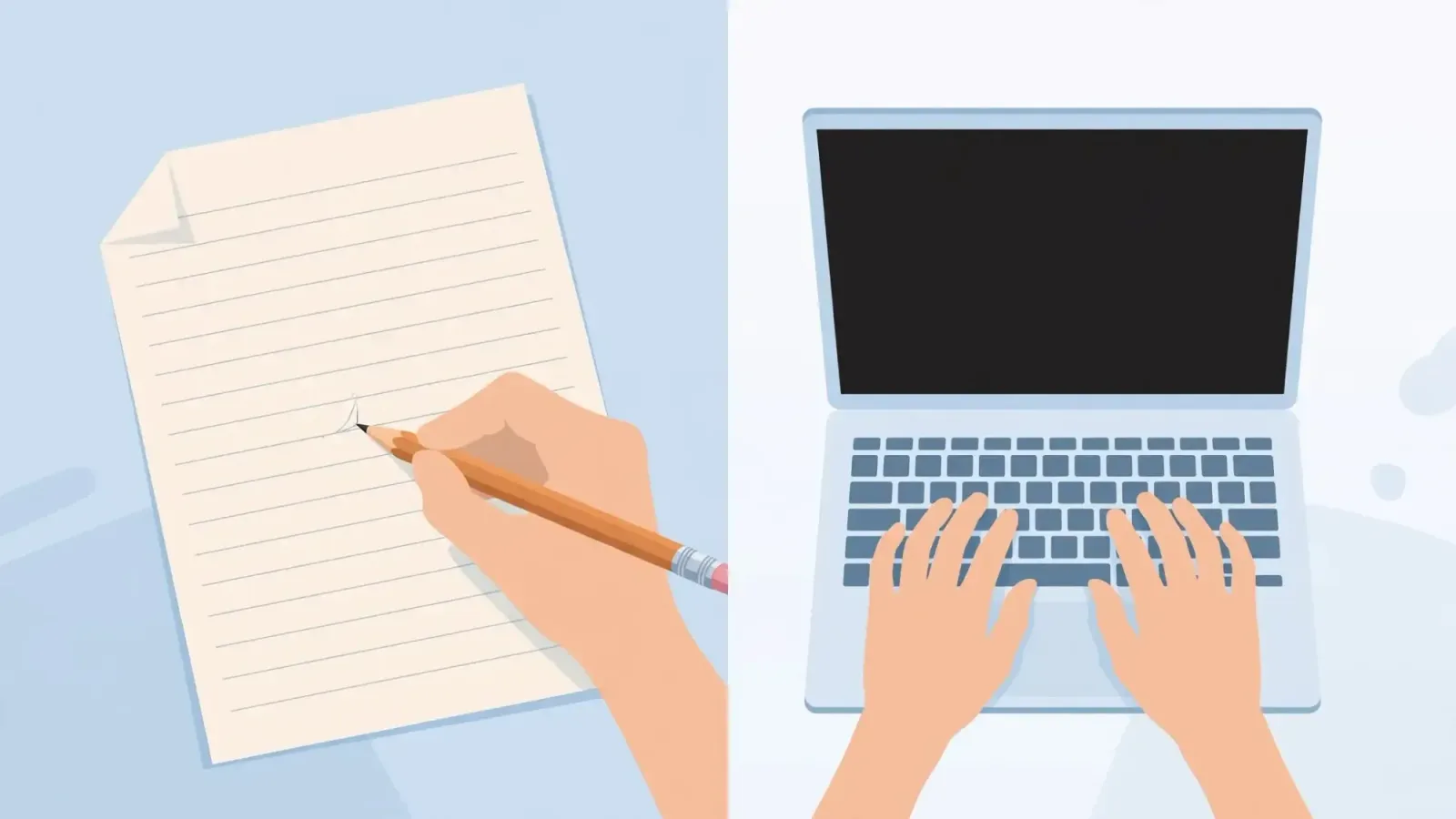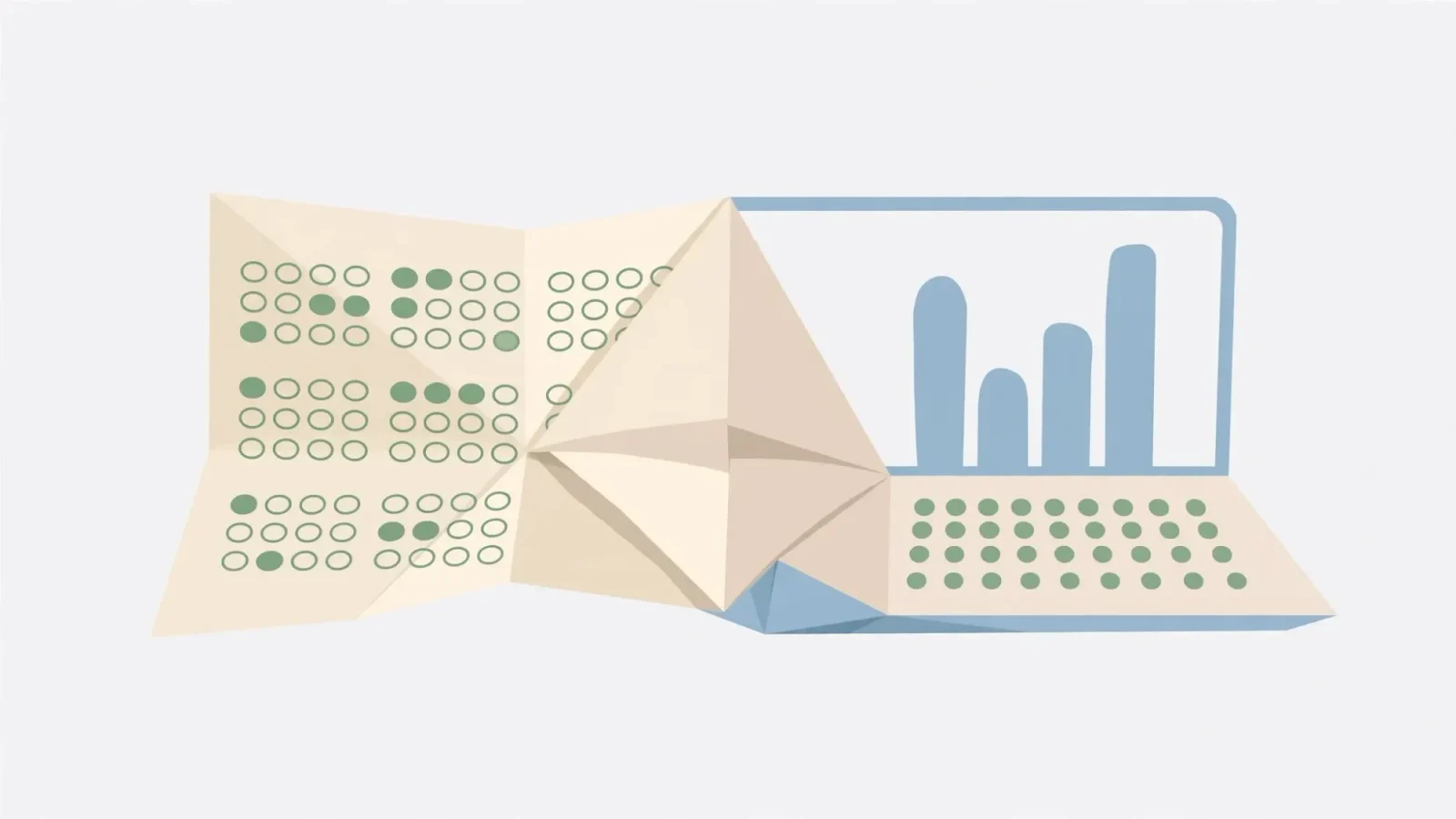
Yes, IELTS is now computer-only in almost every country. In March 2026 the IELTS partners announced that IELTS would no longer be offered as a paper-based test from mid-2026, and most test centres have since stopped running paper sittings. If you book IELTS today, you will take Listening, Reading and Writing on a computer at a test centre.
The test itself has not changed. The questions, the timings, the marking and the 1–9 band scale are the same. What changes is how you work: reading on a screen, typing your answers and using on-screen tools instead of a pencil. Those habits take a few weeks to build, so this guide explains exactly what is different and gives you a plan to get comfortable before test day.
Is the paper-based IELTS test discontinued?
Yes. The official announcement was published on 5 March 2026. It said that from mid-2026 all IELTS tests would be delivered on computer, and that "exact timelines will vary by market". The partners said test takers who chose the computer version reported higher satisfaction, and pointed to faster results and access to One Skill Retake as the main reasons.
Because each country set its own last paper date, the switch happened in stages through 2026. In India, for example, IDP announced that the last paper sittings would be in August 2026 and that the test would be computer-based from September. A few markets moved later than others, so if you are booking in an unusual location, check the test dates on the official IELTS test centre search.
What did not change
- The test content. The same question types, task types and timings, for both IELTS Academic and General Training.
- The marking. Writing is still marked by trained examiners against the same band descriptors.
- The Speaking test. It is still a live conversation with a certified examiner, not a recording into a computer.
- Your old results. Paper-based results remain valid until the end of the recommended two-year period.
- Access arrangements. Large print, braille and lip-reading support continue for candidates who need them.
Can you still take IELTS on paper? The Writing on Paper option
Not fully, but in some countries you can still write by hand. The new IELTS on Computer (Writing on Paper) option works like this:
- You take Listening and Reading on a computer, as normal.
- For Writing, the tasks appear on screen, and you get an answer sheet and a pen to write both tasks by hand.
- Timing, task types and scoring are the same as the typed Writing test.
- According to IELTS, your results arrive within five days, and your Test Report Form does not show that you chose this option.
There are three limits to know before you rely on it:
- It is only offered in selected countries and centres. You choose it when you book the computer test, so check that it appears for your city and date.
- It is not available for IELTS for UKVI. The UK visa test (SELT) is computer-only, with no handwriting option.
- Retakes stay on paper. If you use One Skill Retake for Writing, you must retake it in the same mode you chose the first time.
IELTS on computer vs paper: what changes in each module
Here is where the computer test really feels different. None of these changes affects how your answers are marked, but each one affects how you should practise.
| Module | On paper | On computer |
|---|---|---|
| Listening | Write on the question paper, then 10 minutes to transfer answers | Type answers as you listen, 2 minutes to check at the end |
| Reading | Passage booklet and answer sheet, pencil notes | Split screen, on-screen highlighting and notes |
| Writing | Handwritten, count words yourself | Typed, automatic word counter, no spell-check |
| Speaking | Face to face with an examiner | Face to face with an examiner (unchanged) |
| Results | About 2 weeks | Usually 1–5 days |
Listening: no transfer time
This is the change that catches most candidates out. On paper, you had 10 extra minutes at the end to copy your answers onto the answer sheet. That was useful time to fix spelling and fill gaps.
On computer, IDP explains that you type your answers directly as you listen, and you get only 2 minutes at the end to check everything. The whole test takes about 30–34 minutes.
What this means for you:
- Type the answer the moment you hear it, then move straight on. Don't plan to "tidy up later".
- Spelling has to be right first time. A misspelled answer is a wrong answer, and you no longer have 10 minutes to catch it.
- Use the reading time before each part to read the next questions and predict the type of answer (a number, a name, a noun).
Reading: a split screen and on-screen tools
The passage sits on the left of the screen and the questions on the right. You scroll through the passage instead of turning pages, and you can move between the three passages at any time.
You can select text to highlight it or add a note, which replaces underlining with a pencil. IDP also notes that you can copy words from the passage into your answers, which helps avoid spelling mistakes in completion questions.
The challenge is focus. Many students find it harder to scan a long passage on a screen than on paper, and easier to lose their place. This improves quickly with practice, but only if you actually practise on screen.
Writing: typing with no spell-check
You type both tasks into a box with a word counter below it. The minimums are the same: 150 words for Task 1 and 250 words for Task 2, in 60 minutes in total.
Typing makes it easy to move sentences around and rewrite a weak paragraph. But there is no spell-check, so the red underline you are used to will not save you. Spelling and grammar errors still count against Lexical Resource and Grammatical Range and Accuracy, exactly as on paper.
Speaking: the same as before
Speaking is still a live conversation with a certified IELTS examiner, in the same three parts. Depending on the centre, it may be on the same day as your other modules or on a nearby date.
How to prepare for IELTS on computer: a 4-week plan
If most of your practice so far has been with printed books, use this plan to move it onto the screen. It assumes you already know the test format. If you are earlier in your preparation, follow it alongside your normal study.
Week 1: build typing speed and accuracy
- Find your words per minute with our IELTS writing speed test. It measures your pace when you write your own answer, not copy text.
- Type one IELTS Writing Task 2 essay every two days, timed at 40 minutes, with your browser's spell-check turned off.
- After each essay, count your spelling mistakes and keep a list of the words you misspell most.
Week 2: move Reading and Listening onto the screen
- Do every Reading and Listening practice test on a computer from now on, not from a book.
- In Reading, practise the highlight-then-answer routine: highlight the keyword in the question, find it in the passage, answer.
- In Listening, type every answer as you hear it, and use only the final 2 minutes to check.
- Turn each score out of 40 into a band with our IELTS band score calculator, and compare it with your paper practice scores. A drop of half a band or more means you need more time on screen.
Week 3: full timed tests in computer format
- Take at least one full mock test in one sitting: Listening, Reading and Writing back to back, like test day.
- Notice when your focus drops. Many students find the second half of Reading the hardest on screen.
- Review your mistakes by type. Were they spelling errors, time pressure, or misreading the question?
Week 4: polish your weak spots
- Write two or three more timed essays and have each one scored, with a score for each criterion.
- Fix the criterion that is holding you back first. For many students moving from paper, that is Grammatical Range and Accuracy, because typing mistakes and missing punctuation creep in.
- Do one last full mock test about a week before the exam, then rest.
Is IELTS on computer harder? Common worries, answered
"I'm a slow typist." You need less speed than you might think. To reach 150 and 250 words with time to plan and check, you need about 10 words a minute while writing your own IELTS answer, which is much slower than typing-test speeds for copying text. Three or four weeks of daily typing is usually enough to get there. If you really can't, check whether your centre offers Writing on Paper.
"Will typing noise distract me?" Test centres provide headphones for Listening and take steps to reduce noise. Practising with some background noise at home helps you get used to it.
"Do examiners mark typed essays more strictly?" No. The same examiners use the same band descriptors. The only real difference is that a typed essay is always easy to read, which can only help you.
"Is the score really the same?" IELTS says its research found that scores are comparable across formats, both overall and within each band. Universities and immigration bodies accept both in the same way.
How PrepAsk helps you practise for computer-delivered IELTS
Because the real test is now on screen, your practice should be too. With PrepAsk's computer-based IELTS mock tests, you work in the same computer format you will meet on test day:
- Reading practice uses a split-screen layout, where you can highlight text and add notes on the passage. After each test you see exactly where every answer was in the passage.
- Listening practice plays the recording while you type your answers, as in the computer test, and the review highlights where each answer was in the transcript.
- Writing practice has a live word counter for each task, and gives you an estimated band score with a score for each of the four criteria, plus grammar corrections and feedback on what to fix next.
- Speaking practice scores your recorded answers by criterion, so you know which part of your speaking to work on next.
All PrepAsk scores are estimated band scores, not official results. Their value is in showing which criterion is holding you back, so you can fix it before test day. If you want to know how far you can trust AI scoring, read our guide on how accurate AI IELTS feedback is compared with a tutor.
The bottom line
Paper-based IELTS has ended, and almost everyone now takes Listening, Reading and Writing on a computer. The test content and scoring have not changed, so there is nothing new to learn about the questions themselves. What you need is practice in the format: typing fast and accurately without spell-check, answering Listening questions as you hear them, and reading long passages on a screen.
Give yourself three or four weeks to move your practice onto the screen. Start today with a full IELTS mock test on computer, and use the results to decide which module needs the most work.